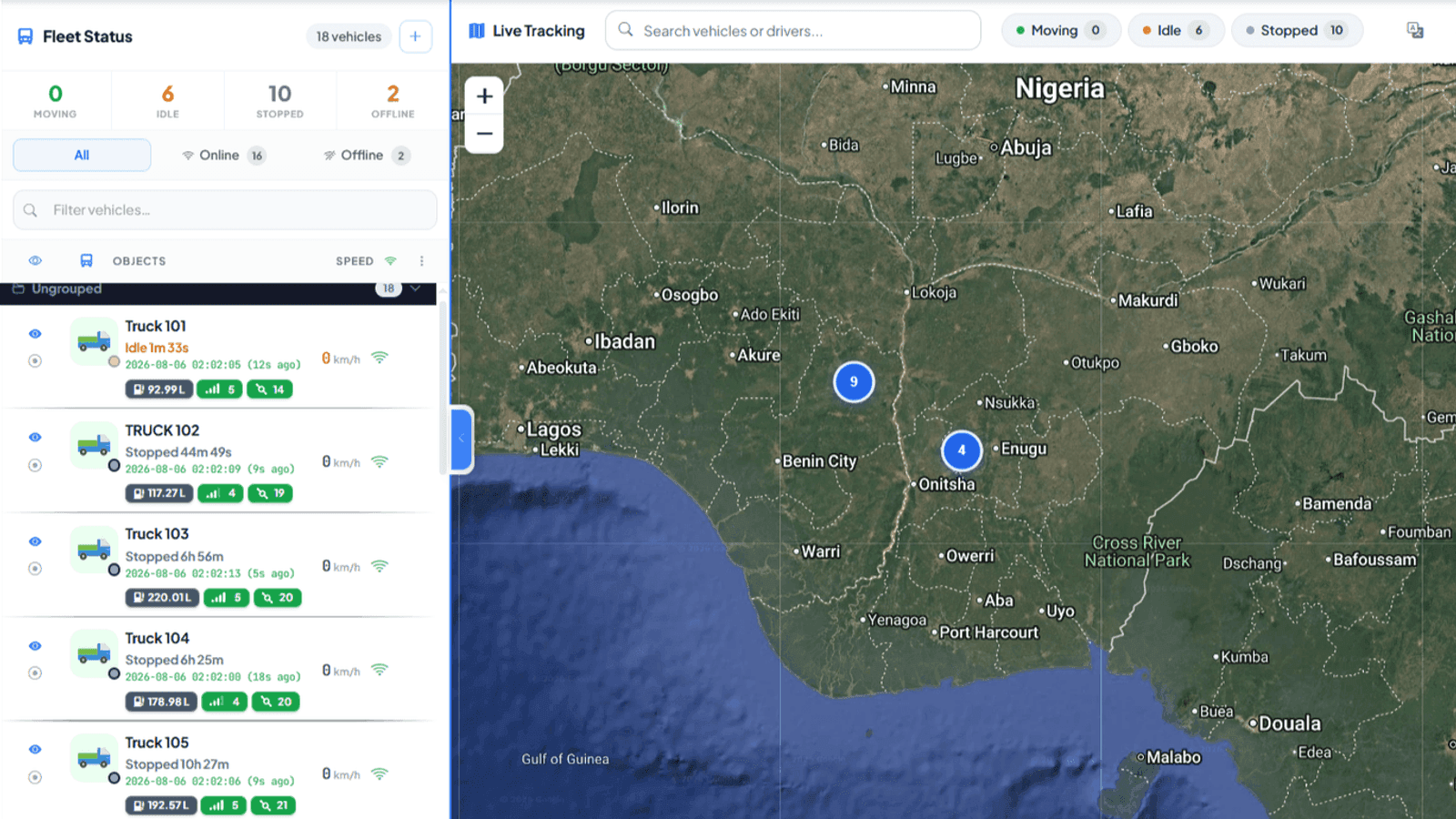
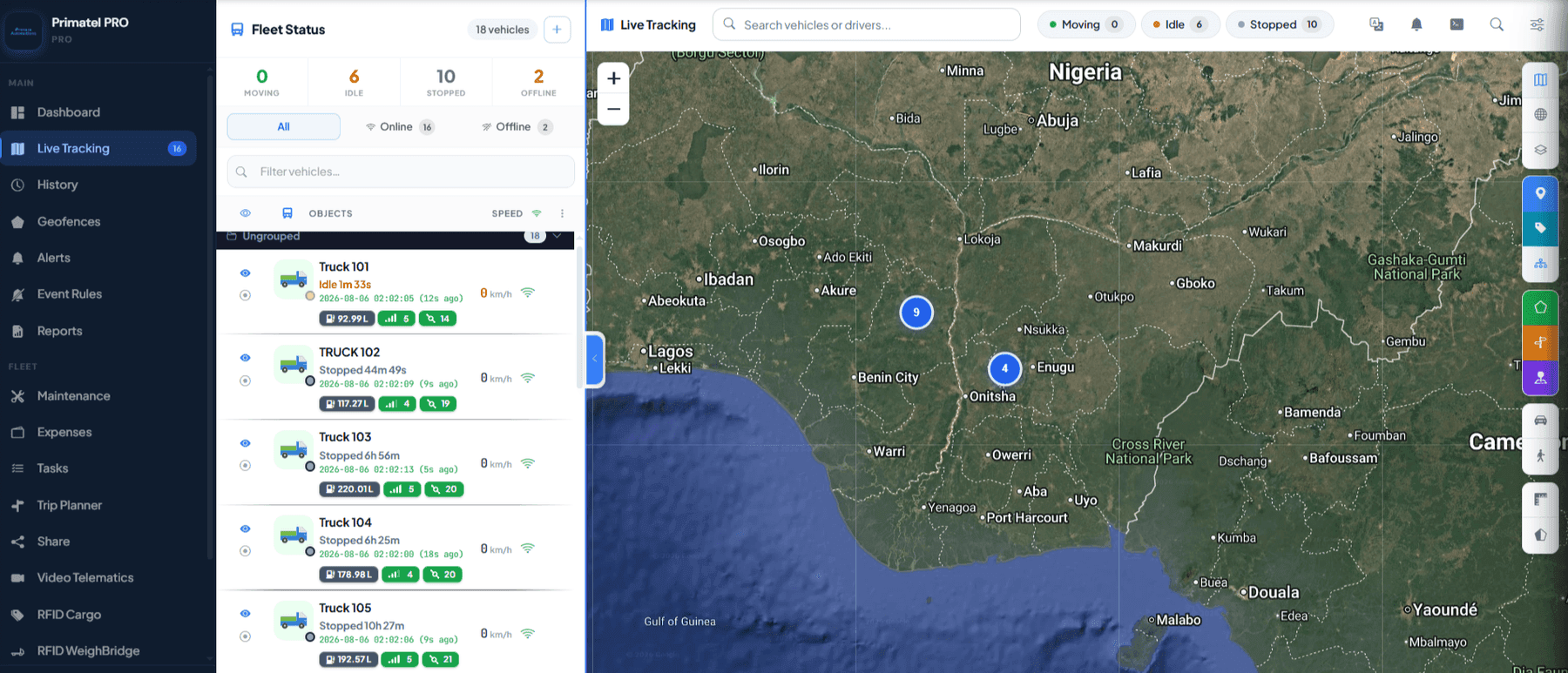
At 8:17 on a Monday morning, a fleet manager opens his dashboard.
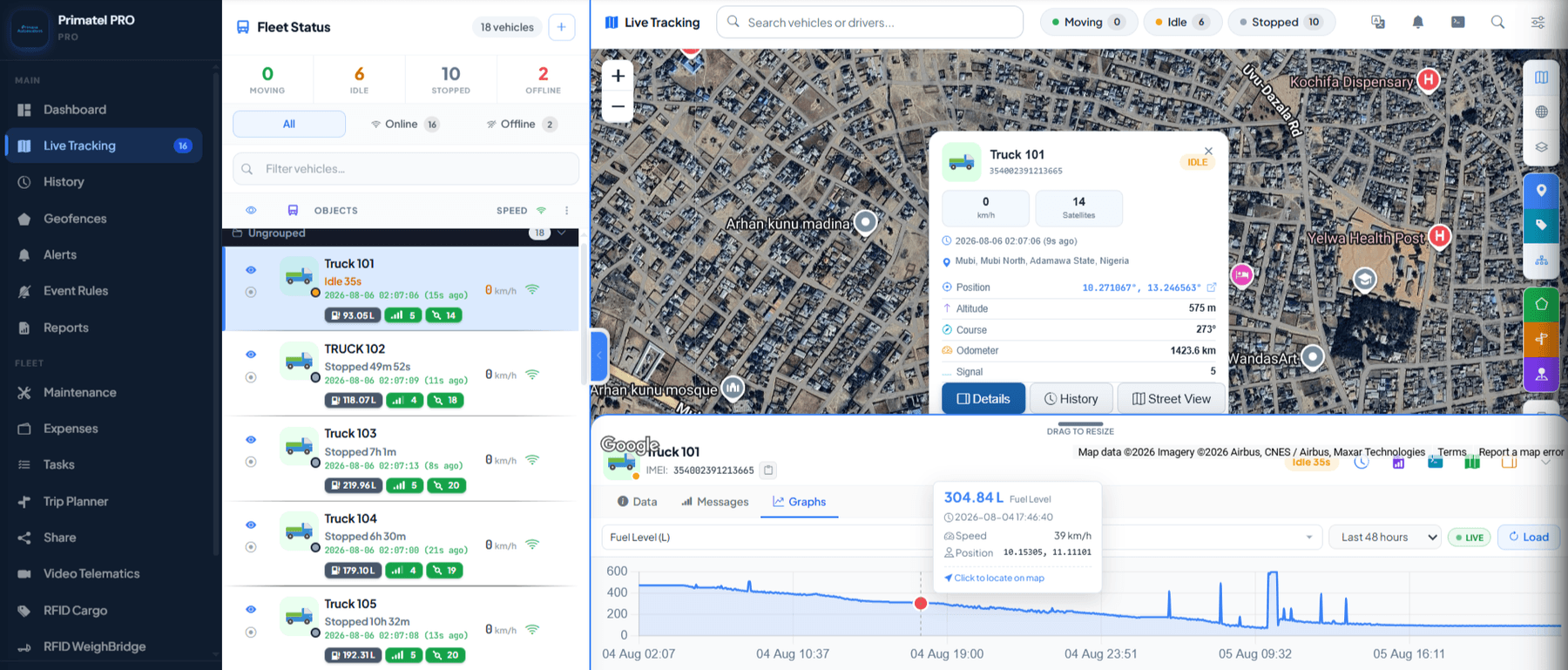
Five hundred vehicles are displayed on the screen.
Green dots are moving across Nigeria. Some are on highways. Others are entering depots. A few are stationary.
The system is working.
At least, technically.
But ask a different set of questions and the picture changes.
Which vehicles are overdue for maintenance?
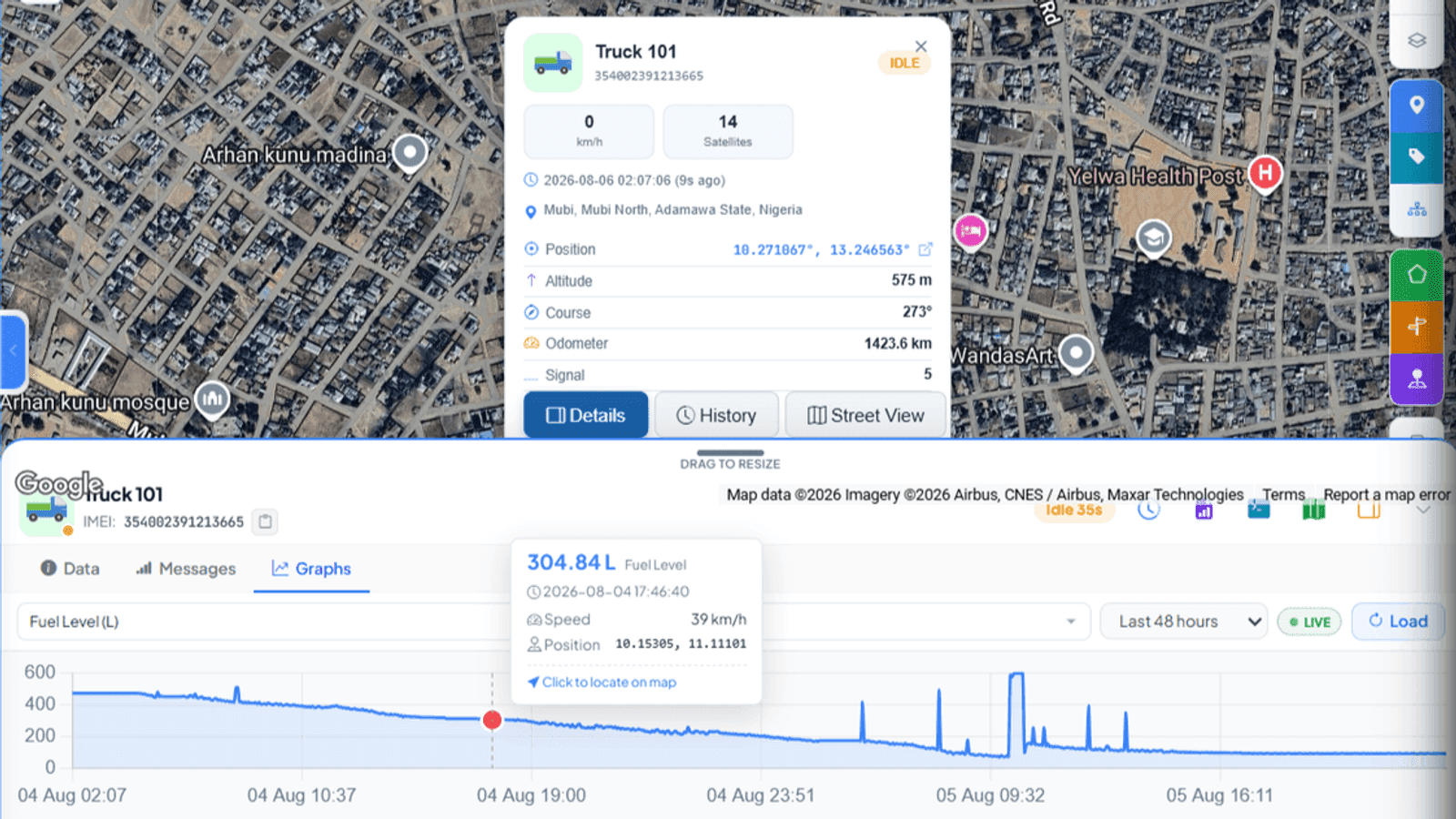
Which trucks consumed more fuel than they should have last week?
Which drivers are repeatedly speeding?
Which vehicles have been offline?
How many hours of unnecessary idling happened yesterday?
Which trucks have developed recurring problems?
How much money did the fleet lose because of those problems?
And perhaps the most uncomfortable question:
Who actually followed up on all those alerts?
If nobody knows, then the company may have 500 GPS trackers.
It may not have a fleet management system.
The GPS tracker has become the easy part
Nigeria has no shortage of companies selling GPS tracking devices.
There are devices for cars, trucks, buses, trailers, construction equipment and other commercial assets. Some are sophisticated telematics devices. Others are basic trackers that provide location, speed and a handful of alerts.
The technology itself is no longer particularly difficult to obtain.
The difficult part is what happens after the vehicle appears on the map.
This distinction is sometimes lost when businesses purchase tracking systems.
A company buys 100 trackers. They are installed. The vehicles appear on the platform. The fleet manager receives login details.
Everyone considers the project complete.
But fleet management has barely started.
Nigeria's own regulator frames it the same way. The Federal Road Safety Corps' Road Transport Safety Standardization Scheme, created under the National Road Traffic Regulations to require safety units of every transport operator, is organised into seven areas: registration of fleet operators, certification, driver training, collaboration with enforcement agencies, continuous inspection, enforcement of a model safety policy, and evaluation and reporting.
Not one of those seven is "install tracking devices."
The regulator's picture of a properly run fleet is a set of processes. Technology is there to serve them.
Tracking is not management
This is perhaps the simplest way to understand the problem.
Tracking tells you where something is. Management tells you what to do with what you know.
A GPS tracker can tell you that a truck has been stationary for three hours.
Fleet management asks: why?
Is the driver resting? Is there traffic? Has the vehicle broken down? Is the driver waiting to load? Is the vehicle being used for an unauthorised purpose? Is there a mechanical problem?
The location alone doesn't answer those questions.
The information needs interpretation.
And interpretation needs someone responsible for acting on it.
A dashboard full of alerts is not fleet management
Modern tracking platforms can generate an enormous amount of information.
Overspeeding. Harsh braking. Harsh acceleration. Geofence violations. Ignition events. Long idling. Towing. Power disconnection. Low battery. Fuel changes. Offline devices. Route deviations. Maintenance reminders.
The technology can produce all of this.
But here's the problem.
An alert is not an action.
If a system sends 200 speeding alerts every day and nobody reviews them, those alerts are little more than notifications.
If a vehicle repeatedly reports abnormal fuel consumption and nobody investigates, the company hasn't solved a fuel problem. It has simply documented one.
If a truck reaches its maintenance interval and nobody schedules it for service, the reminder has achieved nothing.
The difference between information and management is action.
The 500-truck test
Imagine a company operating 500 commercial vehicles. It has GPS tracking across the entire fleet.
Now ask management these ten questions.
- Which vehicles are currently offline? Not yesterday. Right now.
- Why are they offline? Network? Power? Device fault? Tampering?
- Which vehicles are due for maintenance? And who is responsible for scheduling them?
- Which vehicles are consuming abnormal amounts of fuel?
- Which drivers consistently display risky driving behaviour?
- How much time did the fleet spend idling last month?
- Which vehicles have experienced repeated mechanical problems?
- How many hours of vehicle downtime occurred?
- How much did that downtime cost the company?
- What actions were taken based on the information?
If the answer to number 10 is unclear, the problem isn't the GPS tracker.
The problem is the management system around it.
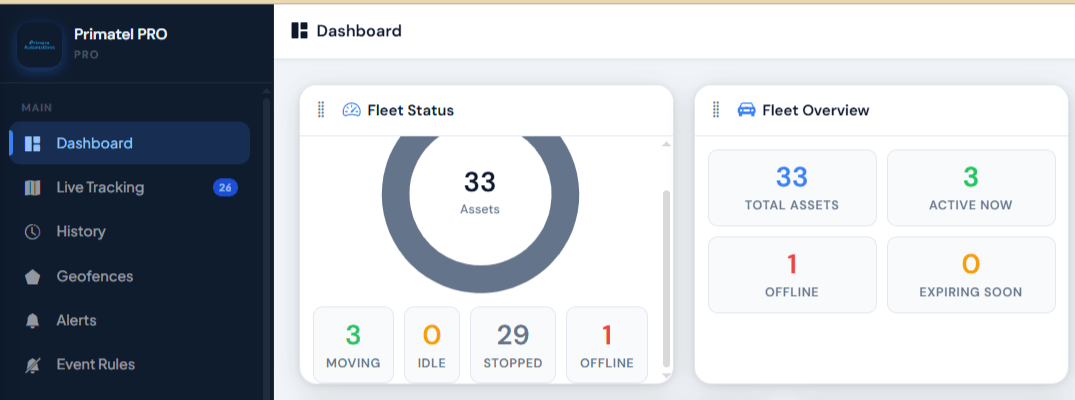
Where fleet management actually begins
A proper fleet-management system has several layers.
Hardware. The tracker, fuel sensor, dash camera, CAN interface, temperature sensor or other equipment collecting information from the vehicle.
Connectivity. The cellular network and data connection transmitting information from the vehicle.
Platform. The server and software receiving, storing and presenting the information.
Data. Location, speed, fuel, engine information, driver behaviour, trips, alerts and other operational information.
Analysis. Someone has to look at that information and identify patterns.
Action. Maintenance gets scheduled. Drivers are contacted. Fuel discrepancies are investigated. Vehicles are inspected. Routes are changed. Management makes decisions.
That is fleet management.
The tracker is simply one part of the chain.
The most expensive part is often what happens after installation
A business can spend millions installing tracking equipment and still fail to achieve the expected return.
Why?
Because the company treated the project as an equipment purchase instead of an operational system.
The installation team leaves. The dashboard remains. The vehicles continue moving.
And eventually, the excitement disappears.
The fleet manager stops checking certain reports. Drivers become accustomed to the alerts. Maintenance reminders are ignored. Offline devices remain offline. Fuel anomalies become normal.
The platform becomes another piece of software nobody really uses.
This happens more often than businesses like to admit.
Technology doesn't create accountability by itself
This is another uncomfortable point.
A company can monitor a driver without actually holding that driver accountable.
The system might show repeated speeding. But if management never discusses it with the driver, nothing changes.
The system might show excessive idling. But if nobody calculates the fuel cost and addresses the behaviour, the company continues paying for it.
The system might show unauthorised movement. But if there is no process for investigating the event, the alert is meaningless.
Accountability requires a process.
Technology makes the process easier. It does not replace it.
The same applies to maintenance
Consider a truck that repeatedly develops faults.
A basic tracking system may show where the truck is. A more advanced telematics system may provide additional vehicle information.
But neither automatically repairs the truck.
Someone still has to connect the information to a maintenance process. The question becomes:
What happened? How often has it happened? What component is involved? Was the vehicle inspected? Was the repair completed? Did the problem return?
That is where fleet management becomes much more valuable than simple vehicle tracking.
The objective is not merely to collect historical information. It is to use that information to prevent the same problem from becoming expensive again.
The difference between data and intelligence
A fleet can generate thousands of data points every day.
That doesn't necessarily make the business smarter.
Data becomes useful when it answers a business question. For example:
| Stage | What it looks like |
|---|---|
| Data | Truck 127 idled for 4 hours. |
| Information | Truck 127 is consistently idling longer than similar vehicles. |
| Insight | The vehicle spends excessive time waiting at a particular location. |
| Action | Investigate the loading process and driver behaviour. |
That's the progression: data → information → insight → action.
A GPS tracker gives you the first part.
A fleet-management system should help you reach the last part.
Why some fleet projects fail
The failure isn't always technological.
Sometimes the tracker works perfectly. The platform works. The data is accurate.
The problem is that nobody owns the process.
Who checks the reports? Who investigates abnormal events? Who follows up with drivers? Who maintains the devices? Who manages renewals? Who handles technical problems? Who trains new employees? Who reviews fleet performance every month?
If nobody has those responsibilities, the system slowly becomes underused.
And once people stop using the information, the investment begins turning into an expense.
This is where the industry needs to change
Fleet management companies should stop selling tracking as though the installation itself is the finished product.
The customer isn't buying a box.
They are buying visibility and control.
That requires hardware. It requires software. But it also requires people, processes and support.
A serious fleet-management provider should be asking questions before recommending equipment.
- What type of vehicles do you operate?
- Where do they travel?
- How many vehicles are there?
- What problems are you experiencing?
- Is fuel loss an issue?
- Are maintenance costs increasing?
- Do you need driver monitoring?
- Do you need CAN data?
- Do you operate in areas with inconsistent network coverage?
- What information does management actually need?
Only after understanding those questions should the technology be selected.
Primera Automations: beyond the installation
At Primera, we don't consider a project complete because a vehicle appears on a screen.
The installation is the starting point.
The objective is to give the business a system it can continue using to manage its assets.
That means selecting the appropriate hardware for the vehicle and operating environment. It means proper installation. It means configuring the platform around the customer's operational needs. It means helping the customer understand the information. It means troubleshooting when something goes wrong.
And it means continuing to support the system after the installation team has left the site.
Because a fleet doesn't stop operating after installation day.
Neither should the fleet-management company.
The question every fleet owner should ask
Before spending money on hundreds of trackers, ask the supplier one question:
"After you install these devices, what happens next?"
Not: "Do I get an app?"
Not: "Can I see my trucks on a map?"
Not: "How much is each tracker?"
Ask: what happens next?
Who monitors the system? Who supports us? Who handles failed devices? Who helps interpret the reports? Who manages maintenance information? Who investigates recurring problems? Who helps us turn the data into decisions?
That is where you begin separating tracking companies from fleet-management companies.
500 trackers are not 500 managed vehicles
A company can install 500 trackers in a week.
That is an impressive installation project.
But it tells you almost nothing about whether those 500 vehicles are being managed effectively.
The real measure is what happens afterward.
Are vehicles being maintained? Are drivers accountable? Are fuel losses being identified? Is downtime falling? Are unauthorised movements being investigated? Are managers making better decisions? Is the company getting more value from its vehicles?
If the answer is yes, then the technology is doing its job.
If the answer is no, the business may simply have 500 dots moving around a map.
And there is a world of difference between the two.
The Primera perspective
Fleet management should not end with:
"Your tracker has been installed."
It should begin with:
"Now let's see what your fleet is telling us."
Because the purpose of telematics isn't to produce more data. It is to help a business lose less money, protect its assets, maintain its vehicles, improve accountability and make better decisions.
That requires more than hardware.
It requires a system.
And more importantly, it requires someone willing to stand behind that system.
500 trackers can give you 500 locations.
A properly managed fleet can give you control.
Read next: The problem with selling technology without support, part two of this series, on what happens after the installer leaves. Then Your GPS tracker is working. So why are you still losing money?, part three, on the illusion of control.
If you are running 10 or more vehicles and want to know what your fleet is actually telling you, talk to our team or see how Primera Fleet works.
Sources
- Federal Road Safety Corps, Road Transport Safety Standardization Scheme (RTSSS)
- Federal Road Safety Corps, vehicle maintenance requirements for fleet operators (PDF)
- Nigerian Communications Commission, Type Approval
- Teltonika, FMC920 technical documentation
- Teltonika, FMC650 technical documentation