
Search for a vehicle tracker in Nigeria and you'll find hundreds of them, most at prices that look too good to ignore. Many are cloned devices built to a price, not a standard, and the difference only becomes obvious on the one day it matters, when the device that was supposed to protect your asset has quietly been offline for weeks.
A tracker isn't really a gadget. It's an insurance policy that has to work in the background for years. Here's what to actually check before you buy.
1. Hardware class, not just price
The cheapest devices cut corners you can't see: weaker GPS, unreliable modems, poor build quality. Enterprise-grade, fleet-class hardware costs more because it's engineered to keep reporting accurately in real conditions, heat, dust, vibration, bad network, for years. Ask what class of hardware you're getting, not just the sticker price.
2. 4G, not dying 2G
Nigeria's networks are moving on from 2G. A tracker built on ageing 2G may already be losing coverage, and will only get worse. 4G gives you smoother real-time location, a stronger signal in built-up areas, and a device that keeps working for years to come.
3. A backup battery and tamper alerts
If cutting one wire kills the device, it isn't protecting anything. A proper unit has an internal backup battery so it keeps reporting when the main power is disconnected, and sends a tamper alert the instant someone interferes with it.
4. Remote engine cut-off
Live location tells you where a stolen vehicle is. Remote engine immobilisation lets you do something about it, safely stopping the vehicle from your phone once a theft is confirmed. For anti-theft, this is the single most valuable feature. Confirm it's included and that it's fitted correctly.
5. Concealed, professional installation
A device a thief can find and unplug in thirty seconds is decoration, not security.
Where and how the unit is installed matters as much as the unit itself. It should be hidden, with no visible wiring, fitted by trained engineers, not clipped under the dashboard where anyone knows to look.
6. Genuine data, not just a dot
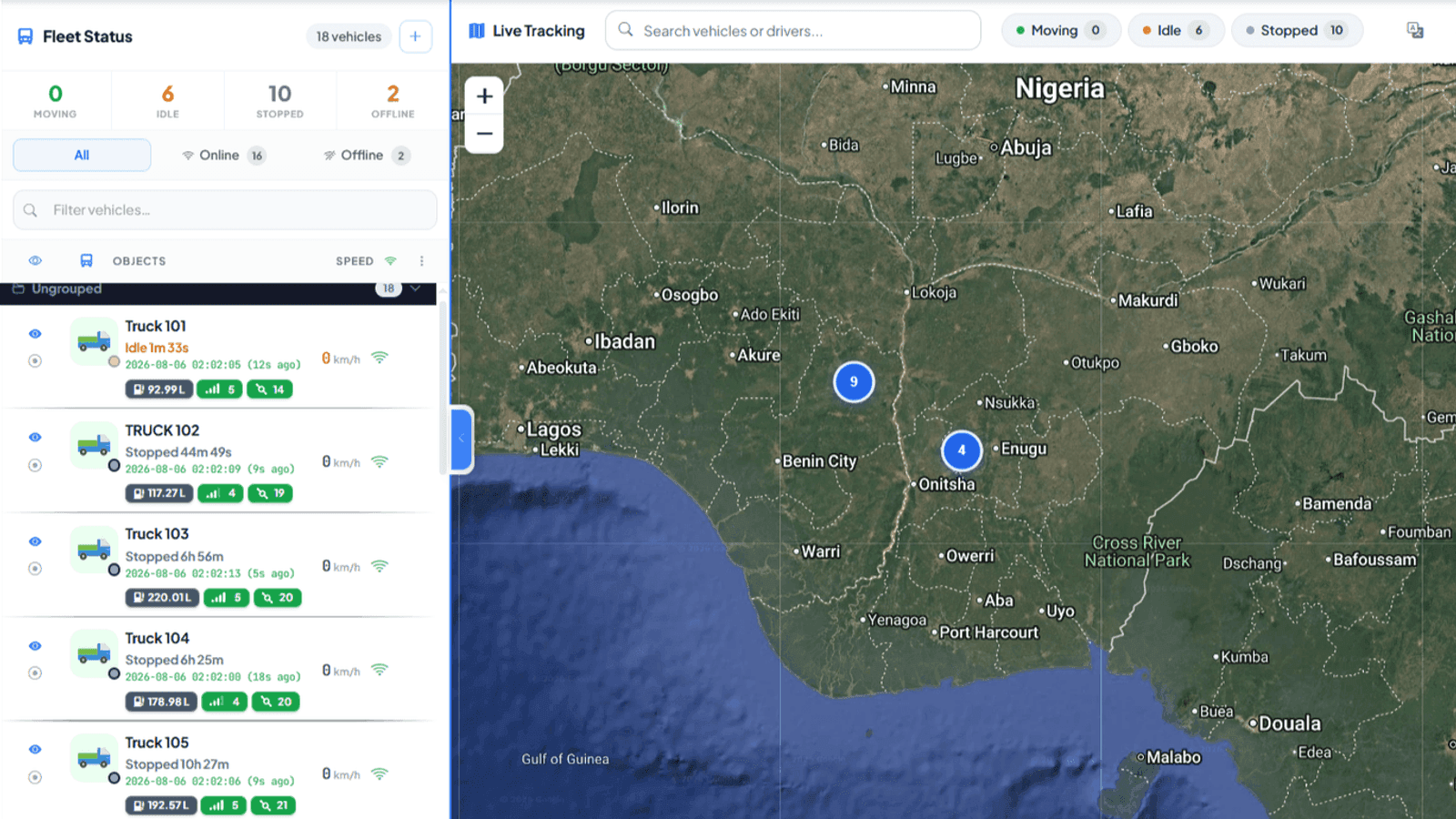
The better platforms report real vehicle data, accurate ignition, odometer, fuel level, door status, not just a moving marker. That's the difference between knowing a vehicle is "somewhere near Lagos" and knowing it's stopped, engine off, at a specific address, ten minutes ago. Mobile app and web dashboard both matter.
7. Who answers when something goes wrong
This is the one most buyers skip, and the one that hurts most. When your vehicle is taken at 2am, a device is only as good as the people behind it. Ask: is there real after-sales support? Is anyone monitoring? What actually happens when you call? A one-time box sale from a vendor you never hear from again is not a plan.
The quiet test
Here's a simple way to judge any offer: ask what happens in year two. A cheap tracker's story ends at the sale. A real system keeps its SIM, data, monitoring and support running, keeps the firmware current, and is still protecting your vehicle long after the novelty wears off.
If price is the only thing on the table, you'll likely get exactly what you paid for. If getting it right matters, weigh the seven points above. They're the ones you'll care about on the day you need it.
Primera fits fleet-grade hardware, never the cloned devices flooding the market, for one vehicle or a whole fleet. Protect my vehicle, Manage a fleet, Talk to us.