Ask most fleet operators in Nigeria what their single largest running cost is, and the answer is immediate: fuel. Ask them how much of it reaches the engine, and the room goes quiet.
That gap between what you pay for and what actually moves your vehicles is where margin quietly disappears. It rarely shows up as one dramatic theft. It leaks, a little at a time, across dozens of vehicles and hundreds of trips, until the monthly fuel bill simply feels "high" and nobody can say exactly why.
The four ways fuel goes missing
In our installs across logistics, haulage and distribution fleets, the same patterns come up again and again:
- Siphoning. Fuel drawn from the tank while a vehicle is parked, idle overnight, or "broken down" in a quiet spot.
- Phantom refills. Receipts for litres that never entered the tank, an inflated pump reading, a shared receipt, a top-up that was smaller than claimed.
- Excessive idling. An engine left running for hours burns fuel while the vehicle earns nothing. It hides in plain sight because the vehicle is "on duty."
- Unauthorised trips and routes. Personal detours, side jobs and longer-than-needed routes all bill back to your fuel budget.
None of these are exotic. What makes them expensive is that, without the right data, they're invisible, and what you can't see, you can't challenge.
Why the dashboard gauge can't help you
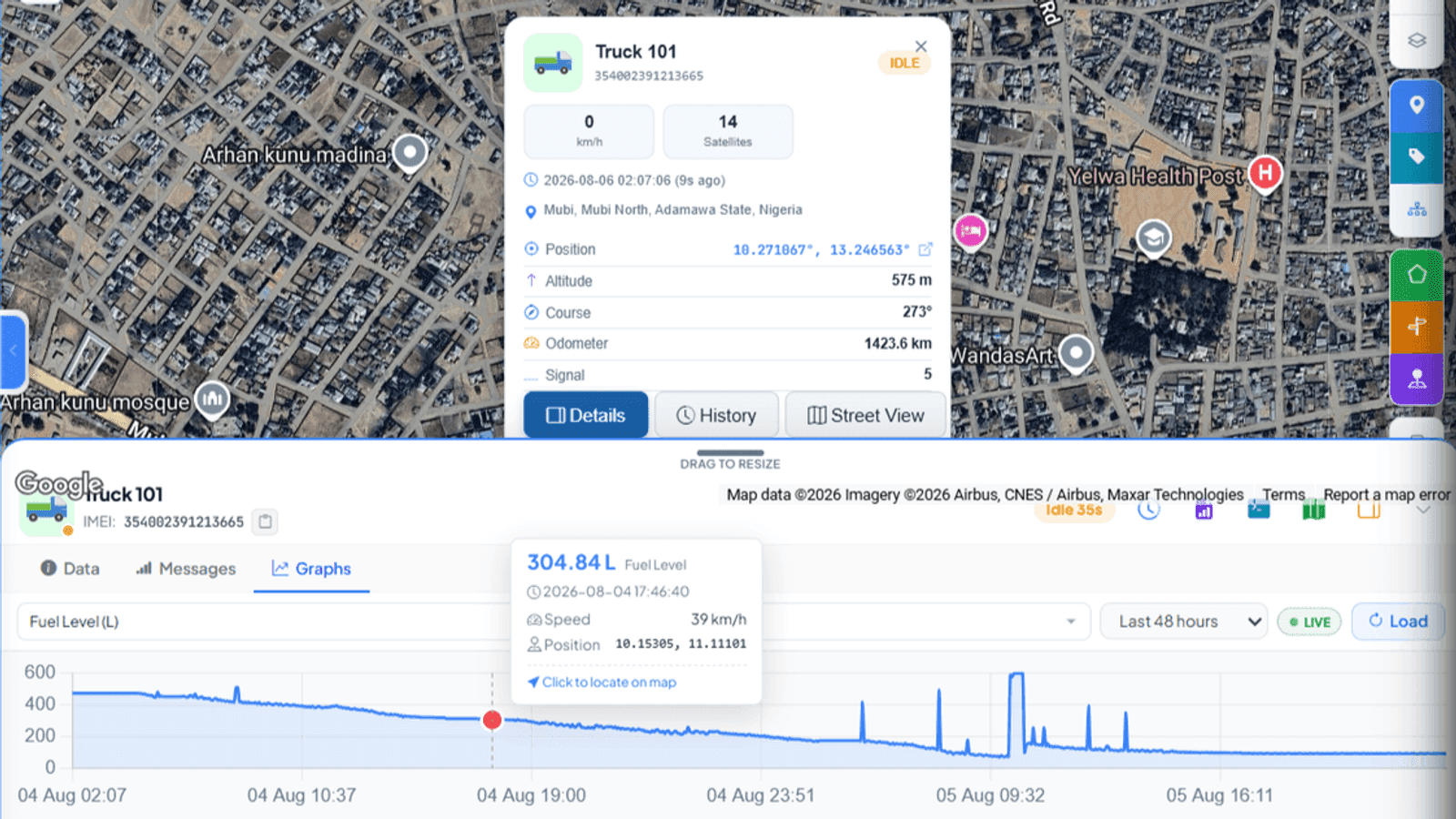
A vehicle's own fuel gauge answers one question, roughly: is there fuel in the tank right now? It won't tell you that 30 litres left the tank at 2:14am while the truck was parked in Ojota. It won't separate a genuine refill from an inflated one. And it certainly won't put a timestamp and a location on either.
That's the difference between tracking a vehicle and understanding it.
Fuel accountability isn't about catching one thief. It's about making every litre traceable, so the losses stop being worth attempting.
What real fuel visibility looks like
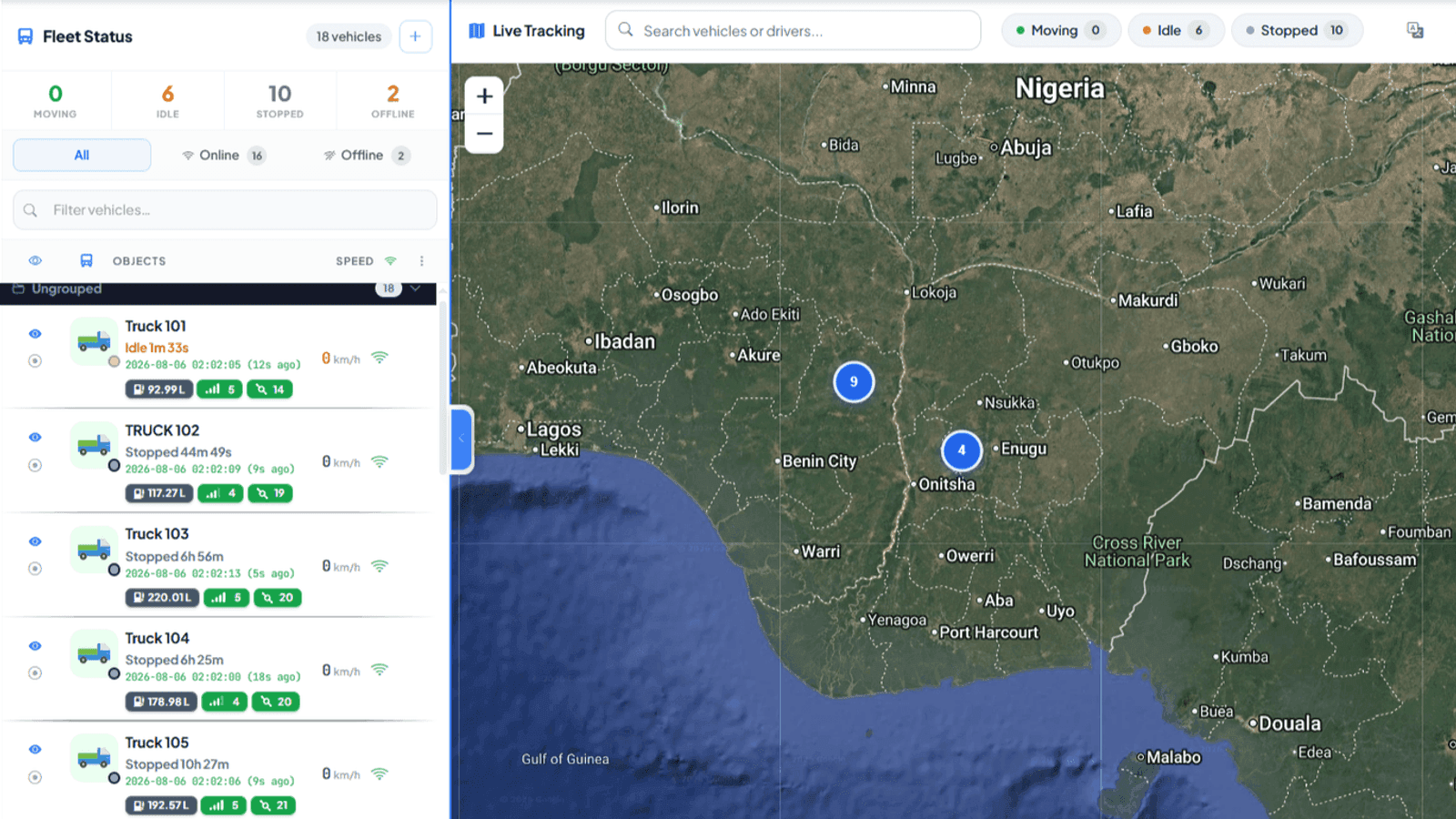
A proper fleet-intelligence setup pairs GPS with a capacitive in-tank fuel-level sensor, and turns the raw signal into answers a manager can act on:
- Fill and drain events, each with a time, a location and a litre figure, so a sudden drop while parked is flagged the moment it happens.
- Refuel verification, so the litres claimed on a receipt can be checked against the litres the tank actually gained.
- Idle reporting, separating productive running time from fuel burned standing still.
- Consumption trends per vehicle and per driver, so the outliers surface on their own.
The point isn't surveillance for its own sake. It's that once drivers and vendors know every litre is measured, the behaviour changes, usually within the first month.
The number that matters
Fleets that move from "we think fuel is high" to "we can account for every litre" typically recover a meaningful share of their fuel spend, the wasted, siphoned and over-claimed portion that was never doing any work. Across a fleet of any size, that recovery tends to cover the cost of the system itself, and then keep paying.
If your fuel bill feels higher than your mileage justifies, that gap is measurable. The first step is simply making it visible.
Primera Fleet brings GPS, fuel sensors, driver behaviour and maintenance into one screen your team will actually check every morning. Explore Fleet & Business, or tell us about your fleet and we'll map what it would show you.