
At 6:30 on a Monday morning, a company's truck is supposed to be on the road.
Instead, it is sitting in a mechanic's yard.
The driver says there was a problem with the engine. The transport manager is trying to find out what happened. The finance department is asking why another repair bill has appeared. The customer is waiting for a delivery that was supposed to arrive that morning.
Nobody knows exactly when the problem started.
Nobody knows whether the driver reported it early.
Nobody can immediately say how the truck has been operated over the previous few weeks.
And nobody can confidently calculate what this one breakdown is actually costing the company.
The repair bill may eventually be ₦500,000.
But the real cost is already higher.
There is lost working time. A delayed delivery. A driver who is no longer productive. Possible towing costs. Another vehicle may have to be hired. A customer may have to be appeased.
The breakdown is visible.
The losses around it are not.
This is how a fleet becomes a liability.
Not overnight. Not because the vehicles were necessarily bad investments.
But because valuable assets were purchased without putting an equally serious management system around them.
The truck is an asset. Until nobody is managing it.
A company can spend tens or hundreds of millions of naira building a fleet.
Trucks. Trailers. Buses. Tankers. Excavators. Dump trucks. Delivery vans. Service vehicles.
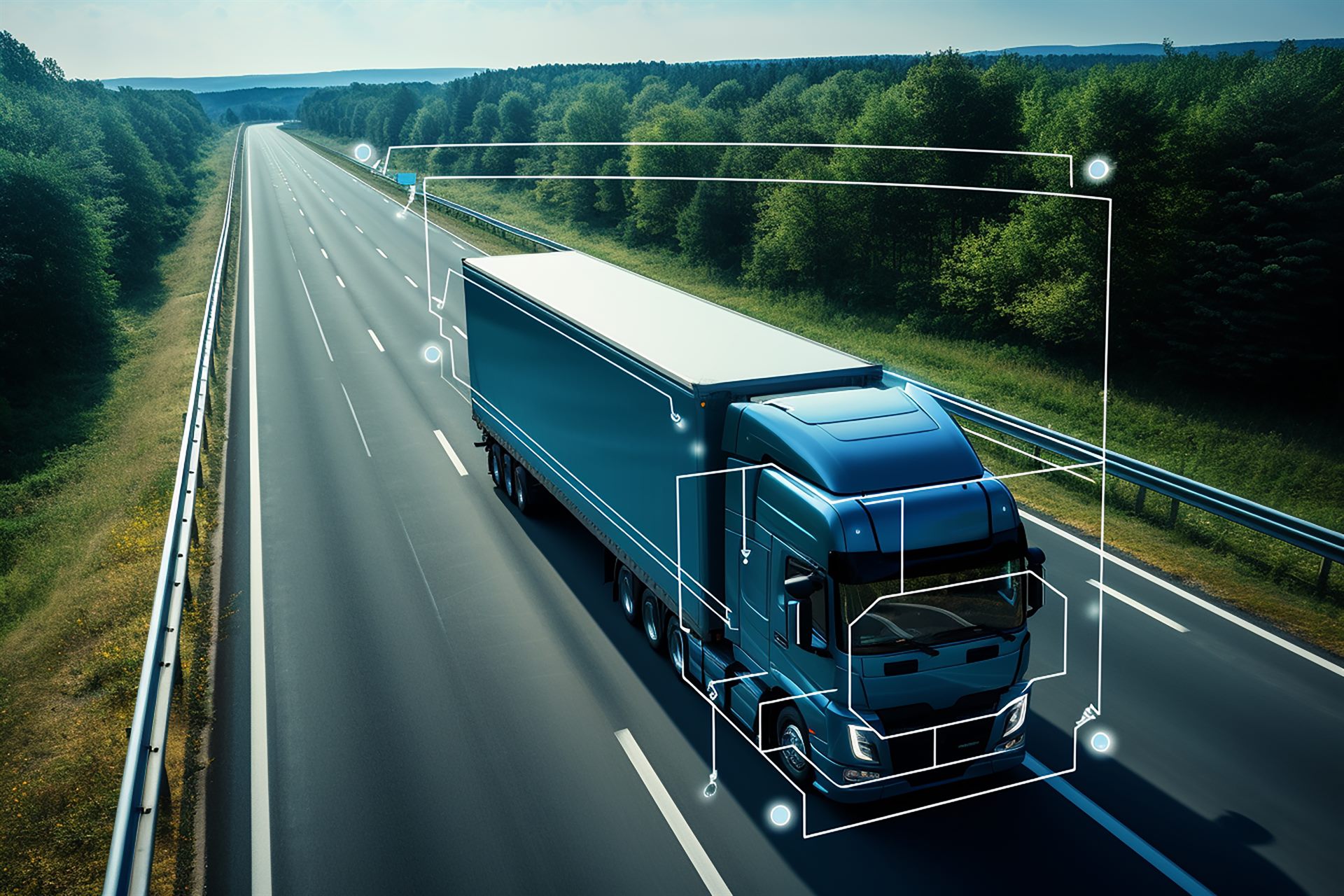
Once those vehicles are purchased, however, the attention often shifts to operations: get the truck moving, complete the job, deliver the goods, collect payment and move on to the next assignment.
The management of the asset itself can become secondary.
That is where the trouble begins.
A vehicle does not become profitable simply because it is moving.
It has to be moving efficiently, safely and economically.
The business needs to know where it is, how it is being used, how much it is costing, when it requires maintenance and whether the revenue it generates justifies the cost of keeping it on the road.
Without that information, ownership can become deceptive.
A company may proudly say it owns 30 trucks.
Operationally, it may be getting the output of 24.
Financially, it may be paying for all 30.
The Nigerian fleet problem is bigger than bad roads
Nigeria's roads place enormous stress on commercial vehicles. That is not controversial.
But blaming poor roads for every fleet problem misses the larger issue.
The Federal Road Safety Corps created the Road Transport Safety Standardization Scheme specifically to bring greater professionalism into fleet transportation and establish minimum standards around operators, drivers and vehicles. The scheme exists because managing a fleet is more than putting vehicles on the road. It extends to defined vehicle maintenance requirements that operators are expected to meet.
Recent research into Nigerian road-haulage operations reaches a similar conclusion from another direction. A 2025 study examining 27 operational cost drivers identified vehicle maintenance, lubricants, driver costs and regulatory compliance among the major cost pressures. It also highlighted low adoption of GPS tracking, fuel monitoring and transport-management systems as a factor contributing to operational inefficiency (full paper, PDF).
The message is straightforward:
The environment is difficult. That makes management more important, not less.
A fleet operating on Nigerian roads needs stronger controls because the operating conditions are demanding.
The most expensive words in fleet management: "manage it"
Every fleet owner has probably heard it.
"Manage it for now."
The tyre can wait.
The service can wait.
The warning light can wait.
The driver can manage the vehicle until it returns.
The mechanic will check it later.
Sometimes, there is a legitimate reason for delaying a repair. Businesses have cash-flow pressures. Parts may not be available. A vehicle may be urgently needed.
But when postponement becomes the normal way a fleet is operated, the business is borrowing against the future condition of its assets.
A small mechanical problem does not become less serious because it has been ignored.
It often becomes more expensive.
And when the vehicle finally stops, management is forced to pay the repair bill at the worst possible time: when the vehicle is already unavailable.
Maintenance is only one part of the problem
Poor maintenance gets most of the attention because the invoice is easy to see.
But a poorly managed fleet can lose money long before anything breaks.
Consider a truck that spends hours idling every week.
Or one that repeatedly takes inefficient routes.
Or a vehicle that is overloaded.
Or a driver who consistently brakes harshly and accelerates aggressively.
Or a truck whose fuel consumption is noticeably higher than comparable vehicles.
Or a vehicle that spends days off the road because nobody knew its scheduled maintenance was due.
None of these problems necessarily appears as one dramatic expense.
They accumulate.
₦20,000 here.
₦50,000 there.
Another tyre.
Another litre of fuel.
Another workshop visit.
Another day of downtime.
Another delayed delivery.
The business absorbs each loss separately.
At the end of the year, however, the combined figure can be substantial.
The most dangerous fleet losses are often the ones that are too small to trigger an emergency but too frequent to ignore.
You can trust your drivers and still have accountability
There is a misconception that monitoring a fleet means management does not trust its drivers.
It doesn't.
A properly managed business does not create systems because everybody is dishonest.
It creates systems because people make mistakes, circumstances change and management needs reliable information.
A driver may genuinely believe he took the most efficient route.
A manager may remember that a vehicle was serviced recently.
A fuel attendant may record a transaction incorrectly.
A mechanic may report a repair differently from another mechanic.
A driver may forget to report a developing fault.
None of these people necessarily has bad intentions.
But without records, the business is left with competing versions of events.
Accountability solves that.
GPS records can establish movement.
Fuel monitoring can establish consumption patterns.
Telematics can show driving behaviour.
Maintenance records can show what was repaired and when.
The point is not to create suspicion.
The point is to replace guesswork with evidence.
Your fleet can lose money without anyone stealing
This deserves particular attention.
When companies talk about fleet losses, the conversation often jumps straight to fuel theft.
But theft is only one possible source of loss.
A company can lose millions of naira without a single person stealing anything.
It can happen through:
- Excessive idling
- Poor route planning
- Aggressive driving
- Vehicle overuse
- Overloading
- Delayed maintenance
- Repeated breakdowns
- Excessive downtime
- Poor fuel efficiency
- Unauthorised vehicle use
- Weak record-keeping
- Underutilised vehicles
These are management problems.
And management problems can be just as expensive as fraud.
The difference is that fraud may involve one person taking money.
Poor management can allow an entire fleet to leak money every day.
What does a truck actually cost?
This is where many fleet owners need to change the way they think.
The purchase price is only the beginning.
The real cost of a vehicle includes:
Purchase price + fuel + maintenance + tyres + drivers + insurance + licensing + downtime + depreciation + repairs + operational overhead.
That is the cost of ownership.
Now consider the other side.
How much revenue does the vehicle generate?
That is the question that matters.
A ₦100 million truck that generates strong, consistent returns may be an excellent investment.
A ₦50 million truck that spends much of its life idle, consumes excessive fuel and requires constant repairs can become a terrible one.
The cheaper vehicle is not necessarily the better asset.
The better asset is the one that performs economically.
Downtime is a cost, even when nobody sends you an invoice
This is one of the most overlooked parts of fleet management.
If a truck is in a workshop for four days, the workshop may give you an invoice for the repair.
But who invoices you for the four days of lost productivity?
Who invoices you for the delayed contract?
Who invoices you for the driver sitting idle?
Who invoices you when the customer begins looking for another transport provider?
Nobody.
That does not mean the loss did not happen.
A vehicle that cannot work cannot generate the revenue it was purchased to generate.
This is why fleet managers should measure downtime, not just maintenance expenditure.
A company that spends ₦10 million maintaining its fleet may actually be managing maintenance very well if those vehicles generate substantial revenue and remain highly available.
Another company may spend ₦6 million and still have a serious problem if its vehicles spend weeks unavailable.
The number on the maintenance invoice is not enough.
The fleet owner needs a dashboard, not a story
Imagine asking for the status of every vehicle in your fleet this morning.
Not just its location.
Its condition. Its performance. Its fuel consumption. Its maintenance status. Its driver behaviour. Its utilisation. Its downtime. Its recent history.
Can your team produce that information?
Or do you have to call five people?
The driver calls the transport manager.
The transport manager calls the mechanic.
The mechanic checks a notebook.
Finance checks old invoices.
Someone searches through WhatsApp messages.
Another person tries to remember when the vehicle was last serviced.
By the time the information is assembled, management is already making decisions with yesterday's information.
That is not visibility.
That is reconstruction.
Technology changes the conversation
This is where modern fleet management earns its place.
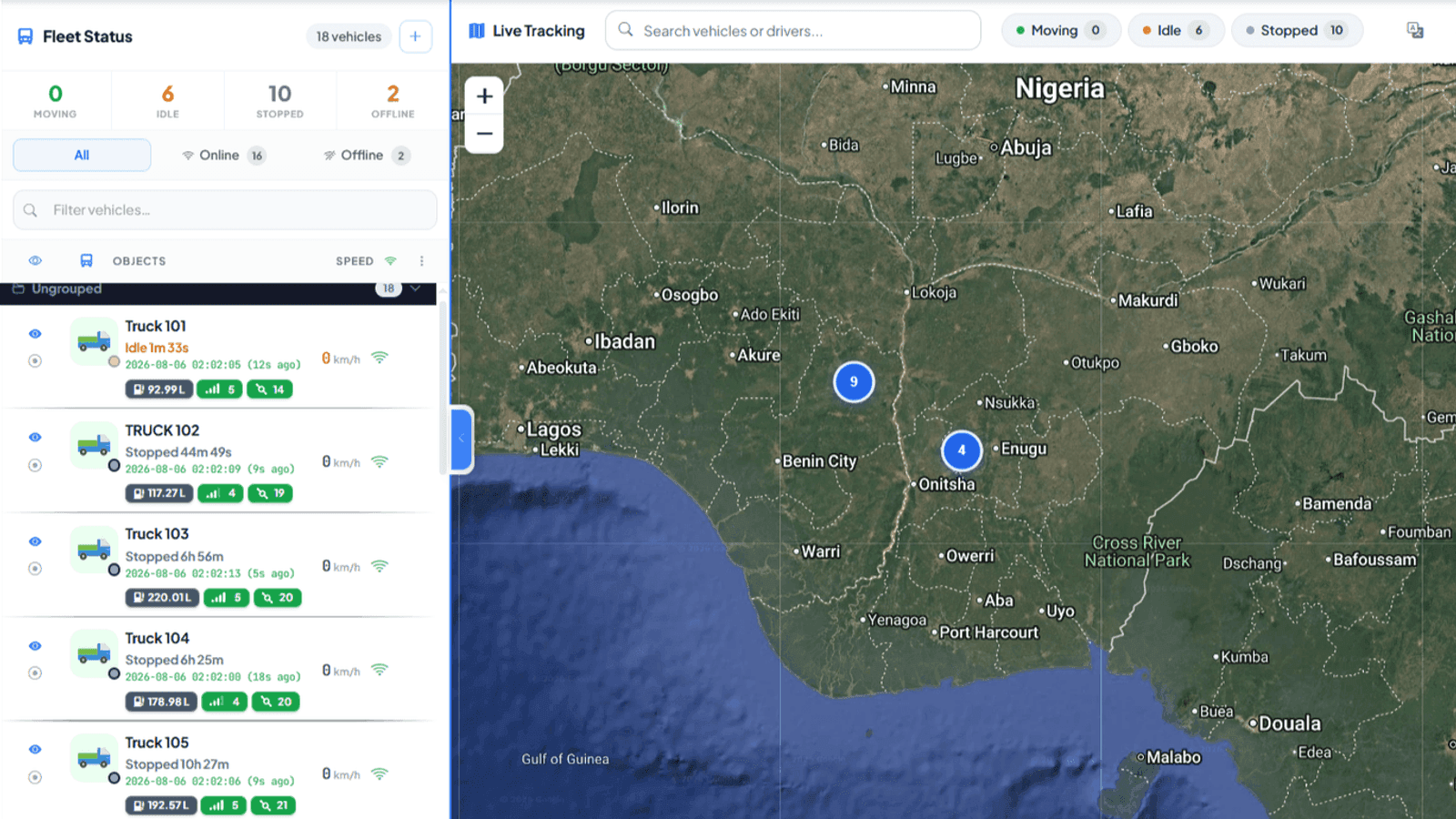
A GPS tracker can tell you where a vehicle is.
But that is only the beginning.
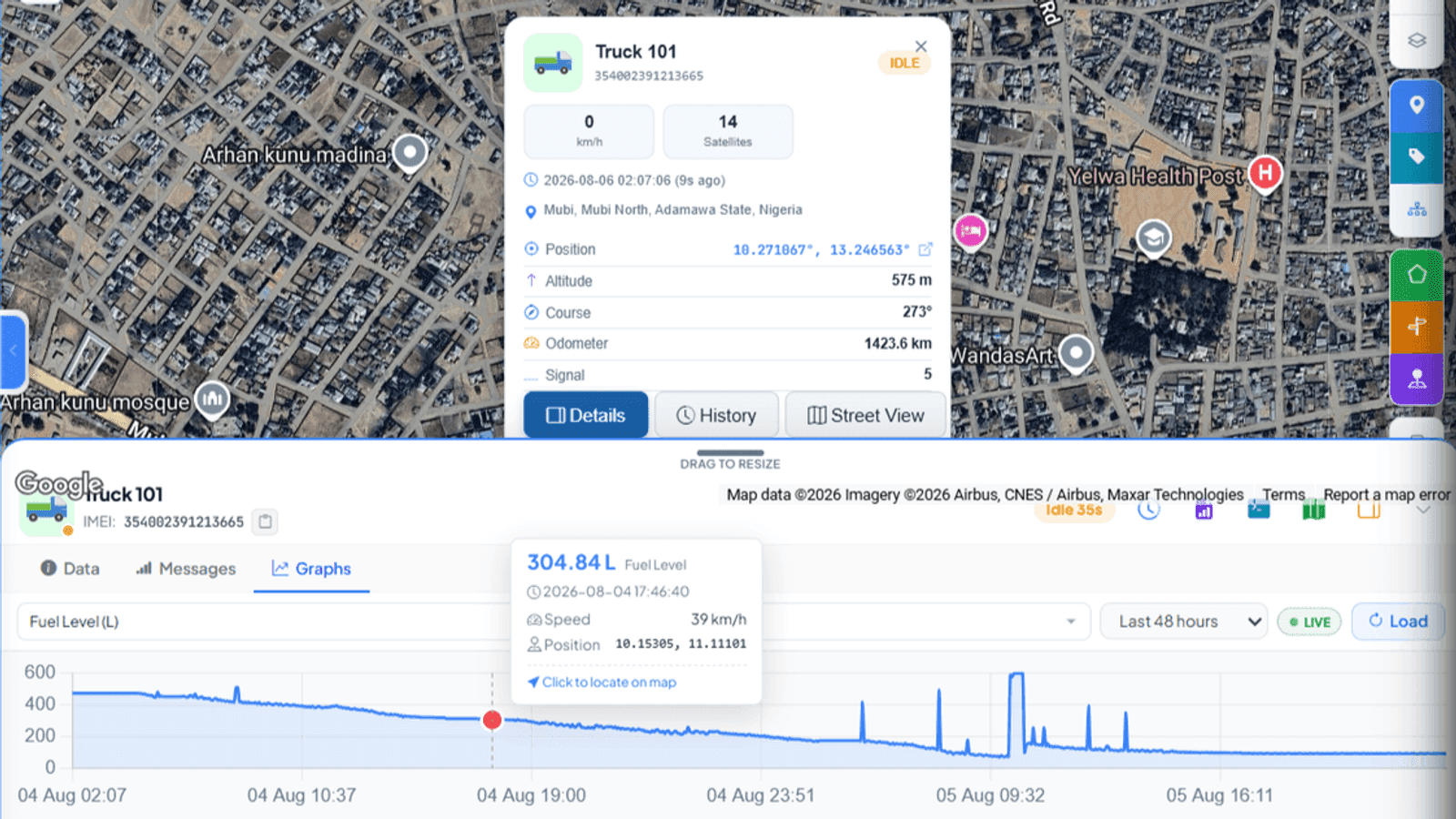
Modern fleet systems can bring multiple pieces of information together so management can see the vehicle as an operating asset rather than a moving dot on a map.
Depending on the hardware and system involved, that can include:
- Live location
- Route history
- Driver behaviour
- Speeding
- Harsh braking
- Harsh acceleration
- Excessive idling
- Fuel level and consumption
- Mileage
- Maintenance schedules
- Vehicle utilisation
- Geofencing
- Engine information
- Unauthorised movement
- Downtime
That information becomes valuable when somebody actually uses it.
A fuel sensor is useful when abnormal consumption triggers an investigation.
A GPS tracker is useful when route information improves accountability.
A maintenance reminder is useful when somebody acts before the vehicle breaks down.
A driver-behaviour report is useful when it leads to training or corrective action.
Technology without management is just data.
Management turns data into results.
This is where fleet management companies need to do more
There is a difference between installing fleet technology and managing a fleet with technology.
The first is a service.
The second is a management capability.
A company can install GPS trackers on 100 trucks and still have a poorly managed fleet if nobody reviews the data, follows up on maintenance, investigates unusual fuel consumption or holds operators accountable.
The hardware is not the solution by itself.
The system around the hardware is.
This is the gap Primera Automations was built to address.
Primera Automations: beyond the installation
At Primera Automations, we do not believe the job ends when a tracker is installed and an application login is handed to the client.
That is the easy part.
The real question is what happens afterward.
What does the data tell the business?
What action should management take?
Which vehicle needs attention?
Which driver requires review?
Which vehicle is consuming more fuel than expected?
Which asset is spending too much time idle?
When is maintenance due?
What happened before the breakdown?
These are the questions that turn tracking into fleet management.
Primera's role is to give businesses the tools and visibility required to manage the assets they have already invested in.
That can include vehicle tracking, telematics, fuel monitoring, driver-behaviour monitoring and maintenance-related visibility, depending on the fleet's requirements.
The objective is not simply to watch vehicles.
It is to help businesses control the cost, performance and condition of those vehicles.
The five questions every fleet owner should be able to answer
If you operate a serious fleet, you should be able to answer these questions without making five phone calls:
1. Where is every vehicle?
Not where the driver says it is. Where is it actually?
2. How is every vehicle being used?
Is it operating within the company's expectations?
3. What is every vehicle costing the business?
Fuel, maintenance, downtime and other operating costs should not be mysteries.
4. When does every vehicle need attention?
Maintenance should be planned, not discovered after a breakdown.
5. Which vehicles are actually performing?
Your largest asset may not be your best-performing asset. The data should tell you.
If these questions cannot be answered, the issue may not be the size of the fleet.
It may be the quality of the management system around it.
A better way to think about fleet investment
The next time a business considers buying another truck, there is a question that should come before the purchase order.
Not:
"Can we afford this vehicle?"
But:
"Can we manage this vehicle properly?"
Because purchasing the asset is only half of the investment.
The other half is protecting its productivity.
A company that buys ten trucks but cannot control fuel, maintenance, utilisation or downtime has not solved its transportation problem.
It has increased the size of it.
The companies that will get the most from their fleets are not necessarily those with the largest number of vehicles.
They will be the companies that know their vehicles best.
They will know what is happening on the road.
They will know what is happening in the workshop.
They will know where money is being lost.
And they will have the information to act before a small problem becomes an expensive one.
Your fleet should work for you
A truck should be an asset.
A trailer should be an asset.
A service vehicle should be an asset.
Heavy equipment should be an asset.
But an asset only creates value when it is properly managed.
Otherwise, depreciation continues, maintenance costs rise, downtime increases and the investment begins working against the business.
Nigeria's operating environment will continue to present challenges. Roads will not suddenly become perfect. Parts will not always be cheap. Fuel costs will fluctuate. Drivers will make mistakes.
Businesses cannot control all of those things.
They can control how they respond to them.
You cannot manage what you cannot see. And you cannot protect an investment you do not properly manage.
That is why fleet management has to go beyond installation.
At Primera Automations, we are building around that principle: not just putting tracking devices in vehicles, but giving businesses the visibility, accountability and management tools to make those vehicles perform.
Because the goal isn't to know where your fleet is.
The goal is to know how your fleet is performing, and to make it perform better.
About Primera Automations Ltd
Primera Automations Ltd provides fleet management and telematics solutions designed to give businesses greater visibility and control over their vehicles and mobile assets.
From GPS tracking and driver monitoring to fuel monitoring and fleet visibility, our focus is on helping businesses turn vehicle data into better operational decisions.
Your fleet is an investment. Manage it like one.
Sources
- Federal Road Safety Corps, official site
- Federal Road Safety Corps, Road Transport Safety Standardization Scheme (RTSSS)
- Federal Road Safety Corps, Vehicle Maintenance Requirements (PDF)
- European Journal of Logistics, Purchasing and Supply Chain Management, Unpacking Critical Operational Cost Drivers in Road Haulage Transport Operations in Nigeria (2025)
- Full study, Unpacking Critical Operational Cost Drivers (PDF)